Overview
The model decides which damaged road links to repair and in what order. A resilience measure tracks the recovery of connectivity and mobility at each stage. The solution approach uses a bipartition-based simplification and a matheuristic based on genetic search.
Findings
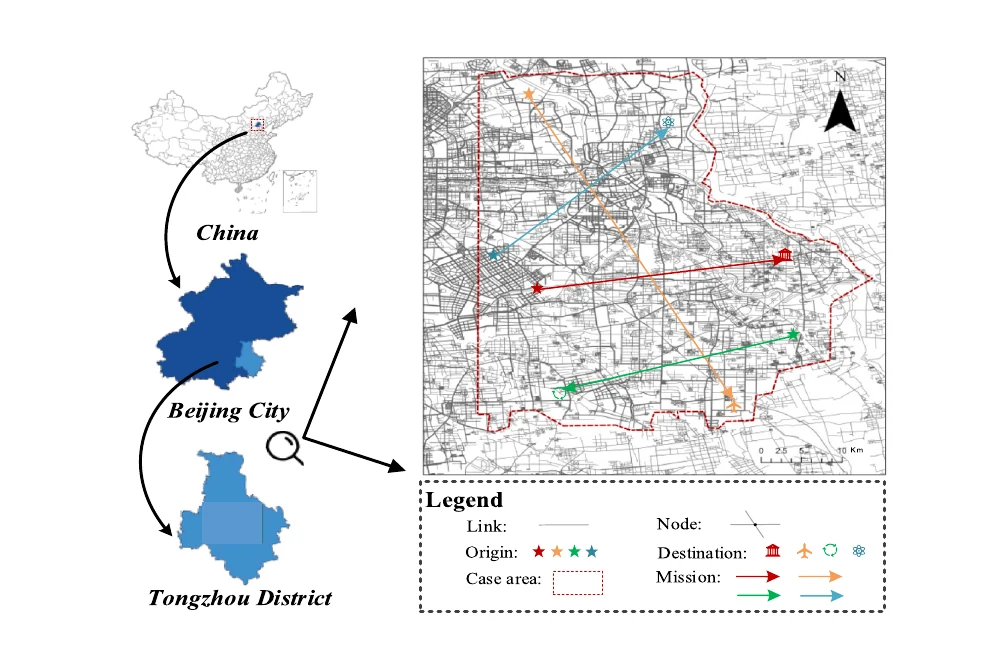
In the Tongzhou case study, the model tended to prioritize high-capacity links when disruption was limited. In scenarios with more extensive damage, higher priority went to links with high betweenness and short repair times.
Author contribution
First author. I contributed to conceptualization and investigation, and drafted and revised the manuscript.