Overview
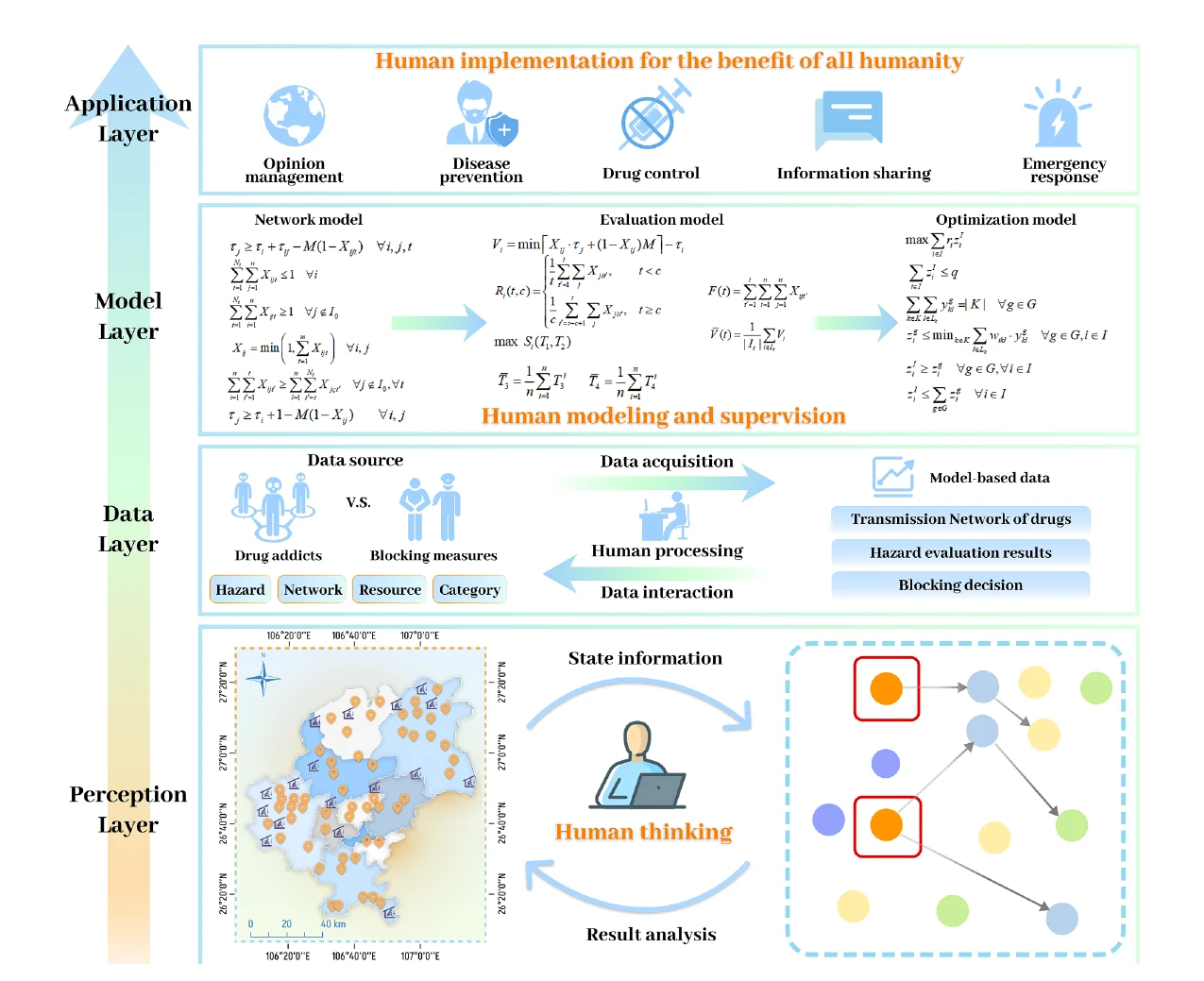
The study addresses how to allocate limited intervention resources as a social network changes. Sensor data update a digital twin of the network. A mixed-integer model uses that representation to recommend interventions, which domain experts can review and adjust.
Findings
The deployment in Guiyang used monitoring data from 2,416 registered individuals. In the study’s comparison with conventional targeting, adaptive population segmentation improved the harm-reduction measure by 3.9%.
Author contribution
Co-corresponding author with Yiyong Xiao. My contributions included conceptualization, methodology, and validation. I also drafted and revised the manuscript.